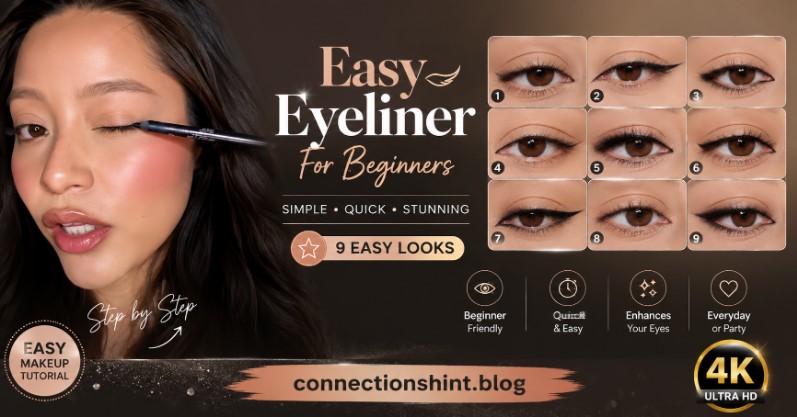
Applying eyeliner can feel intimidating at first. One shaky hand, and suddenly one eye looks completely different from the other. The good news? Almost everyone starts that way.
The secret isn’t having naturally steady hands or expensive makeup. It’s learning a few simple techniques, choosing the right products, and practicing with realistic expectations.
This eyeliner tutorial for beginners breaks everything down into easy, practical steps. Whether you want a subtle everyday look or you’re working toward the perfect wing, you’ll learn how to apply eyeliner with more confidence—and fewer makeup wipes.
Why Eyeliner Feels Difficult at First
Unlike lipstick or blush, eyeliner sits along one of the smallest and most noticeable areas of your face. Tiny differences become obvious.
Also Read: Austin Butler Wife Is the Oscar-Nominated Actor Married?
Common beginner challenges include:
- Uneven lines
- Smudging during application
- Pulling the skin too much
- Choosing the wrong eyeliner type
- Trying dramatic wings before mastering basic lines
The good news is that all of these problems have simple solutions.
Choosing the Right Eyeliner
Not every eyeliner works the same way. Picking the right formula can make learning much easier.
| Eyeliner Type | Best For | Difficulty | Pros | Cons |
|---|---|---|---|---|
| Pencil | Everyday wear | Easy | Forgiving, easy to blend | Less precise |
| Gel Pencil | Beginners | Easy | Smooth application, long-lasting | Needs sharpening |
| Liquid | Sharp wings | Moderate | Crisp, defined lines | Requires steady hands |
| Felt-Tip Pen | Daily makeup | Easy to Moderate | Easy control, clean finish | Can dry out over time |
| Gel Pot | Makeup enthusiasts | Moderate | Rich color, flexible | Requires a brush |
For most beginners, a gel pencil or felt-tip pen is the easiest place to start.
What You’ll Need
Before you begin, gather:
- Eyeliner
- Small mirror
- Cotton swabs
- Micellar water or makeup remover
- Concealer (optional for cleanup)
- Mascara
Good lighting also makes a huge difference.
Prepare Your Eyes
Eyeliner lasts longer on clean skin.
Before applying:
- Wash away oil from the eyelids.
- Apply a light eye primer if available.
- If you don’t have primer, use a tiny amount of concealer and set it with powder.
This helps prevent smudging and fading throughout the day.
Find a Comfortable Position
Instead of holding the mirror straight ahead:
- Rest your elbow on a table.
- Tilt your chin slightly upward.
- Look downward into the mirror.
- Relax your shoulders.
Stability improves accuracy.
Start with Tiny Dashes
One of the biggest mistakes beginners make is trying to draw one long line.
Instead:
- Draw tiny dots or short dashes close to the lashes.
- Connect them slowly.
- Fill any gaps afterward.
Professional makeup artists often use this method because it’s much easier to control.
Keep the Line Close to the Lashes
A common beginner error is leaving visible skin between the lashes and the eyeliner.
Aim to place the liner directly against the lash roots.
This creates:
- Fuller-looking lashes
- More natural definition
- A cleaner finish
If there are tiny gaps, gently fill them in.
Build Thickness Slowly
It’s easy to make eyeliner thicker.
It’s much harder to make it thinner.
Start with a very fine line and gradually build it until you’re happy with the shape.
Thin lines are also more forgiving for hooded or smaller eyes.
Easy Everyday Eyeliner
If you’re just learning, skip dramatic wings.
Try this instead:
- Begin at the center of the eyelid.
- Draw toward the outer corner.
- Return to the inner corner.
- Connect the sections.
- Slightly thicken the outer third.
This simple style works for school, work, or casual makeup.
How to Create a Small Wing
Once you’re comfortable with basic liner, try a subtle wing.
Step 1
Imagine your lower lash line continuing upward.
The wing usually follows that angle.
Step 2
Draw a tiny flick extending just a few millimeters.
Step 3
Connect the tip back toward the upper lash line.
Step 4
Fill the small triangle.
Keep the wing short at first.
Long wings are harder to match.
Don’t Stretch Your Eyelid Too Much
Many people pull the skin tightly while applying eyeliner.
This may look smoother during application, but once you release the skin, the line can become uneven.
Instead:
- Keep the skin relaxed.
- Lift the brow gently if needed.
- Let the liner follow your natural eye shape.
Fix Mistakes Without Starting Over
Small mistakes are normal.
Quick fixes include:
- Dip a cotton swab in micellar water.
- Sharpen the edge with concealer.
- Blend slightly for a soft look.
- Turn uneven lines into a slightly thicker style.
Remember that even experienced makeup artists make adjustments.
Tips for Different Eye Shapes
Different eyes benefit from different eyeliner techniques.
Hooded Eyes
- Keep the line thin.
- Focus on the outer corner.
- Choose waterproof formulas.
Round Eyes
- Extend slightly outward.
- Avoid making the center too thick.
Almond Eyes
- Most liner styles work well.
- Try soft wings for balance.
Monolid Eyes
- Use slightly thicker lines.
- Keep the wing visible when your eyes are open.
Your natural eye shape doesn’t limit your options—it simply changes the technique.
Pencil vs Liquid Eyeliner
Pencil Eyeliner
Best for:
- Everyday makeup
- Soft definition
- Beginners
- Smudged looks
Liquid Eyeliner
Best for:
- Sharp wings
- Bold makeup
- Graphic styles
- Long-lasting precision
Many makeup professionals recommend mastering pencil eyeliner before switching to liquid formulas.
Common Beginner Mistakes
Avoid these habits:
- Drawing one long line
- Applying too much pressure
- Skipping eyelid prep
- Making one eye completely before the other
- Comparing your eyes too closely they’re naturally not identical
- Choosing dramatic wings immediately
Practice consistency rather than perfection.
How to Make Eyeliner Last Longer
Try these simple tricks:
- Prime oily eyelids.
- Use waterproof formulas if needed.
- Set pencil liner with matching eyeshadow.
- Avoid rubbing your eyes.
- Store eyeliner tightly closed.
These habits can noticeably improve wear time.
Practice Routine That Actually Works
Improvement comes from repetition, not speed.
A simple practice schedule:
- Draw thin lines only.
- Practice connecting short strokes.
- Add tiny wings.
- Experiment with different eyeliner styles.
Even five minutes of practice a few times a week can build confidence.
Helpful Tricks Makeup Artists Use
Many professional artists rely on small techniques that make application easier.
Some favorites include:
- Look straight ahead before finishing a wing.
- Blink naturally to check symmetry.
- Apply mascara after eyeliner.
- Clean edges with a flat angled brush and concealer.
- Step back from the mirror occasionally instead of examining every tiny detail.
Remember that perfectly identical eyeliner is nearly impossible because human faces are naturally asymmetrical.
When to Replace Eyeliner
For eye health, replace products regularly.
General recommendations:
- Liquid eyeliner: about every 3–6 months
- Gel eyeliner: around 6 months after opening
- Pencil eyeliner: lasts longer if sharpened regularly
If an eyeliner develops an unusual smell, changes texture, or causes irritation, stop using it and replace it.
Confidence Comes Before Perfection
Everyone’s first attempts look different from their hundredth.
Instead of chasing flawless eyeliner immediately, focus on improving one small skill at a time.
With consistent practice, your hands become steadier, your technique becomes faster, and applying eyeliner starts feeling natural rather than stressful.
The goal isn’t perfection—it’s creating a look that makes you feel confident.
Conclusion
Learning eyeliner takes patience, but it doesn’t have to be frustrating. Start with a beginner-friendly pencil or felt-tip liner, use short strokes instead of one long line, and build your confidence with simple everyday styles before attempting dramatic wings.
The best results come from regular practice, realistic expectations, and finding techniques that suit your own eye shape. Over time, what once felt difficult becomes just another quick step in your makeup routine.
FAQs
1. What is the easiest eyeliner for beginners?
A gel pencil or felt-tip eyeliner is usually the easiest because it offers better control and is more forgiving than traditional liquid eyeliner.
2. How do I stop my eyeliner from smudging?
Prep your eyelids with primer or a light layer of concealer, choose a long-wearing formula, and set pencil liner with a matching eyeshadow if needed.
3. Should beginners start with winged eyeliner?
Not usually. It’s easier to master a thin line along the lashes first, then gradually practice small wings.
4. Why does my eyeliner look uneven?
Natural eye asymmetry, applying too much pressure, or trying to draw one continuous line are common reasons. Short strokes make matching both eyes easier.
5. Can I wear eyeliner every day?
Yes. Daily use is generally fine if you remove it thoroughly before sleeping, keep products clean, and replace old eye makeup regularly.
6. Which eyeliner color is best for beginners?
Black is the classic choice, while dark brown creates a softer, more natural look that’s often easier for everyday wear.
For more updates visit: Connections Hint