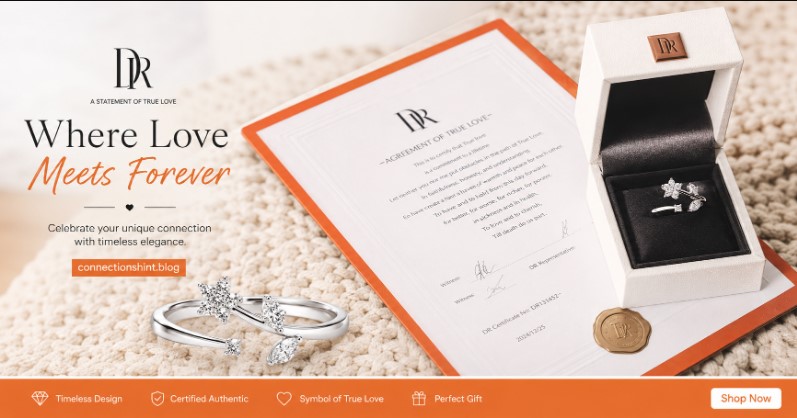
Choosing an engagement ring used to be entirely about the “Four Cs”—cut, color, clarity, and carat weight. But what happens when a jewelry brand shifts the focus from the stone’s physical traits to the buyer’s personal identity? In a world where fast-paced dating and fleeting connections can make long-term relationships feel fragile, a unique concept has captured the attention of couples globally: a ring that you can only purchase once in your lifetime.
This is the core philosophy behind a Darry Ring, an engagement piece that requires formal identity verification before checkout. By tying every single purchase to a government-issued ID, the brand enforces a strict “One Love, One Lifetime” policy. If you want to buy an engagement ring from them, you have to commit your real name to a single recipient forever.
But how does this real-name purchasing system work in practice? Is it an authentic testament to modern romance, or is it simply a clever marketing framework? Let’s pull back the curtain on the identity verification process, the design options, the pricing structures, and the actual privacy measures protecting your personal data.
What is the One-Lifetime Identity Rule?
The guiding principle of this system is simple: true love requires absolute certainty. When a person decides to propose, they aren’t just selecting a precious metal; they are closing the door on all other options. To solidify this sentiment, the company restricts its flagship engagement rings to one per customer.
Also Read: AI Data Center Stocks What’s Driving the Boom in 2026
When you purchase a Darry Ring, the brand creates a unique account linked directly to your verified personal details. This means a buyer cannot return years later to buy a second engagement ring for someone else. The company’s internal lookup system, known as the “Love Check,” allows anyone to verify if a specific individual has already dedicated their single lifetime purchase to a recipient.
While this rule applies strictly to initial engagement pieces, the policy has a few practical nuances:
- Upgrades Are Allowed: If your financial situation improves, you can upgrade your existing ring to a larger diamond or a different setting, provided it is still going to the exact same recipient.
- Wedding Bands and Accessories: Once the initial commitment is verified, you can buy matching wedding bands, anniversary jewelry, and lifestyle gifts multiple times, as long as they are dedicated to your original partner.
The True Love Verification Process
The digital onboarding process turns a routine online checkout into a modern vow ceremony. To maintain the integrity of the lifetime restriction, the purchase flow involves a multi-step identity verification framework. Because this system demands high-level personal documentation, understanding how your data is handled is essential before entering your information.
Here is exactly how the verification pipeline works during checkout:
- Identity Upload: The buyer uploads a legitimate government photo ID, such as a passport or a driver’s license.
- Facial Recognition Scan: The system requires a real-time, front-facing selfie to cross-match the buyer’s physical features with the provided document.
- The Numerical ID Generation: Rather than saving raw files on local servers, an independent, ISO 27001-certified security partner processes the facial features and document data. The data is immediately converted into an encrypted, unique numerical sequence.
- Data Deletion: Once the mathematical sequence is generated to lock your account, the original images and ID scans are wiped from the partner’s systems to maintain compliance with data privacy regulations like GDPR and CCPA.
- Signing the Agreement: Finally, the buyer signs a physical and digital “True Love Agreement”. This document embeds a permanent certificate number inside the ring’s band, linking the physical piece to your partner’s name forever.
Design and Diamond Quality Standards
Stripping away the identity framework leaves you with the jewelry itself. A unique concept doesn’t matter if the ring doesn’t look beautiful on your partner’s hand. The brand centers its design identity around Italian creativity and French artistry, keeping a heavy focus on romantic motifs like hearts, delicate twists, and classic floral halos.
The gemological standards are strictly curated. The brand states that only about 1% of raw diamonds meet their internal standards for color, clarity, and overall brilliance. Every major stone is accompanied by authentic grading reports from reputable global laboratories, including the Gemological Institute of America (GIA) and the International Gemological Institute (IGI). This ensures that your purchase holds independent physical value, separate from its emotional branding.
Pricing Analysis: What Does Commitment Cost?
Because a Darry Ring spans a wide variety of cuts, metals, and stone types—offering both classic natural diamonds and modern lab-grown alternatives—the pricing spectrum is incredibly broad. Prices start around $750 for simple promise bands and can climb past $13,300 for intricate, high-carat luxury settings.
The chart below outlines the estimated pricing tiers across their popular design collections:
| Collection Style | Primary Design Characteristics | Metal Options | Estimated Price Range (USD) |
| DR Heart / Halo | Heart-shaped stones with brilliant halo borders | 18K White Gold, Platinum, Rose Gold | $1,200 – $8,500+ |
| Purete / Classic | Traditional solitaire prongs, sleek lines, minimalist crowns | 18K Yellow Gold, Platinum | $950 – $6,000 |
| Bypass / Luxury Pavé | Split shanks, twisted bands, pavé-set side diamonds | 18K Two-Tone Gold, Platinum | $2,500 – $13,300 |
| Promise / Zirconia Stage | Delicate fashion rings for early-stage relationships | Sterling Silver, 14K Gold | $750 – $1,100 |
The Legal vs. Emotional Reality of the Agreement
A common point of confusion for couples looking into this brand is whether the “True Love Agreement” holds genuine legal power. If a couple breaks up, gets divorced, or faces a change in circumstances, does this contract impact asset division or marital status?
The Reality: The agreement is an emotional and moral contract, not a legally binding document recognized by courts or governmental institutions. It functions as a private pact between two people, backed entirely by the jewelry brand’s retail enforcement policies.
If a relationship ends, the ring remains the physical property of whoever holds it under local property laws. However, from the brand’s standpoint, the buyer’s lifetime quota remains fully used. The company will not wipe an ID from the registry due to a breakup, meaning the buyer cannot purchase a new engagement ring for a future partner. For those seeking absolute emotional security, this permanent restriction provides a profound sense of psychological comfort. For others, it introduces a high-stakes pressure that requires total relationship confidence before buying.
Weighing the Pros and Cons
Like any significant romantic investment, a real-name verification purchase policy comes with unique advantages and distinct trade-offs.
The Advantages
- Unmistakable Intention: Giving a piece that fundamentally cannot be replaced or bought for anyone else proves to your partner that you view them as your ultimate choice.
- High Gemological Integrity: The inclusion of GIA and IGI certifications guarantees that the diamonds are vetted by elite, independent third parties.
- Robust Data Privacy: The use of temporary face scans and immediate data purging via ISO-certified partners ensures your government ID isn’t sitting vulnerably on retail servers.
The Disadvantages
- Zero Room for Error: If a relationship ends prematurely, you lose the ability to ever buy an engagement piece from this specific brand again.
- Upfront Verification Friction: The checkout process is more intense than standard online shopping, requiring active documentation uploads and biometric confirmation before production can begin.
- The Public Registry Factor: Because your commitment can be checked via the public “Love Check” tool, it removes an element of purchase anonymity.
Conclusion
The decision to choose a real-name verified ring comes down to how you view the intersection of romance and commitment. If you see the identity verification process as a beautiful, unchangeable boundary that protects the exclusivity of your bond, it elevates a simple piece of jewelry into a profound family heirloom. It acts as a physical manifestation of your vow to navigate life’s challenges exclusively with one person.
However, if the idea of an unchangeable retail database or automated identity scanning feels restrictive, a traditional boutique jeweler might suit your style better. Ultimately, the true value of the piece isn’t found in the encrypted data profile or the certificate number engraved inside the band—it lives in the daily dedication, trust, and love shared between the two people wearing it.
FAQs
Can I buy a ring without doing the identity verification check?
It depends entirely on the collection you select. The verification check is mandatory for all flagship engagement pieces, wedding collections, and promise rings. However, the brand offers a specific category called “True Love Intent” for everyday lifestyle gifts and fashion accessories, which can be purchased anonymously without providing identification.
What happens if I accidentally order the wrong size for my partner?
If the ring doesn’t fit perfectly, the company offers a standard resize policy within a specific post-purchase window. To minimize this risk before ordering, you can request a free physical ring sizer from their customer care team or utilize their online conversion chart to measure an existing ring while your partner is asleep.
Does the lifetime rule apply to women buying for men?
Yes. The “one ring per lifetime” rule applies universally to the buyer’s account, regardless of gender identity or orientation. Anyone who steps forward to create an account and purchase a primary engagement piece is bound to their designated recipient for life.
For more updates visit: Connections Hint